
In the Media



2026/08/01
Restoring Childhood
Beyond the Waiting List: Where Hope Finds a Heartbeat.
Childhood is measured in moments.
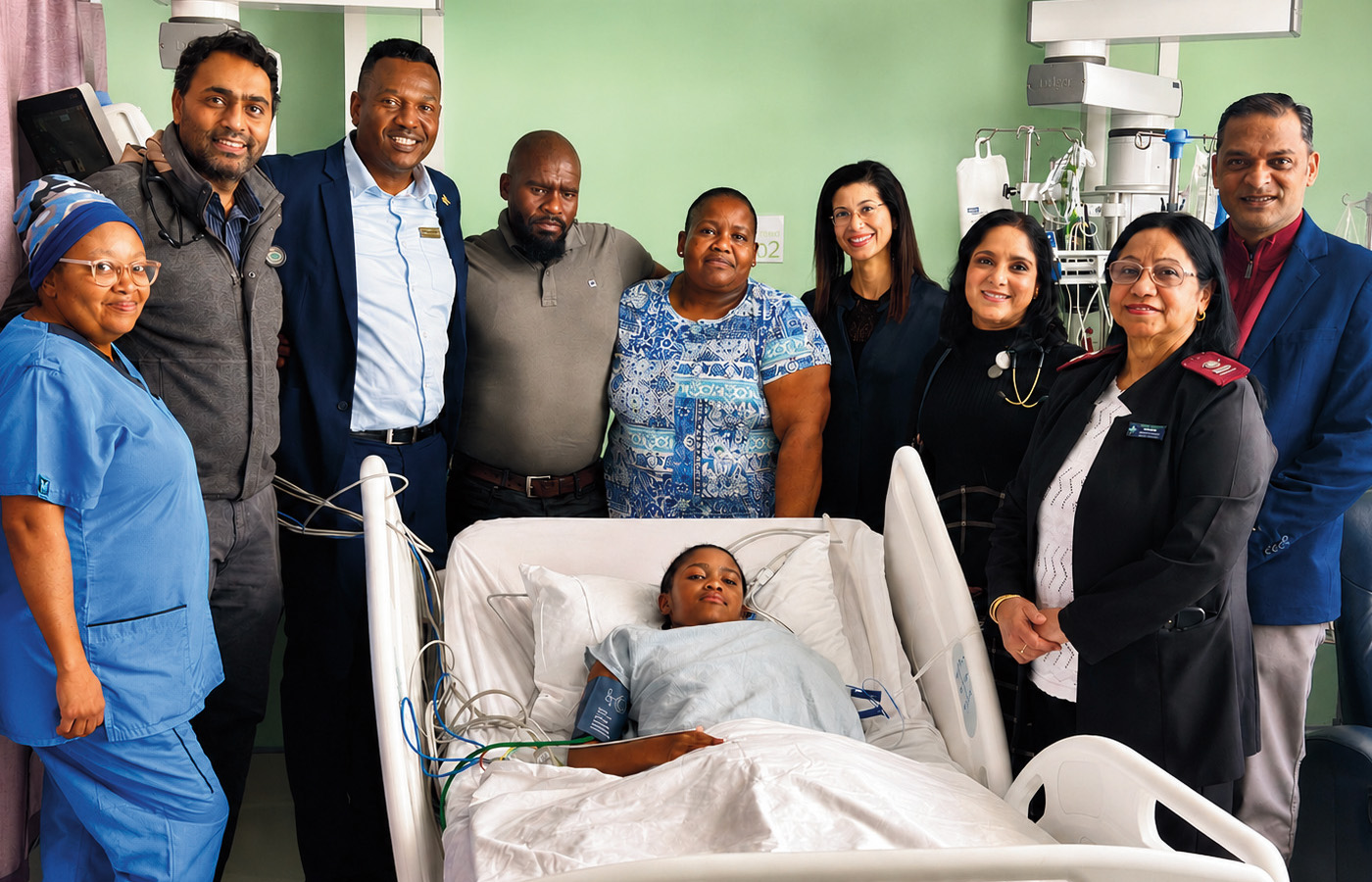
It is chasing a ball across the playground, racing friends to the classroom before the bell rings and playing until the sun begins to set. For most children, these moments arrive without a second thought. For 10-year-old Hleloluhle Enhle Biyela and 8-year-old Melokuhle Shiba, they often ended before they began.
Born with congenital heart defects, both children lived with breathlessness, fatigue and the inability to keep pace with other children their age. Their parents were left asking questions no parent should ever have to ask: Will my child be okay? Will they ever live the life other children take for granted?
For years, those questions remained unanswered.
Until an extraordinary collaboration between Midlands Specialist Private Hospital, Grey's Hospital, Inkosi Albert Luthuli Central Hospital and the KwaZulu-Natal Department of Health united specialists across the public and private healthcare sectors with one shared purpose: giving two children the opportunity to simply be children again. For Phumzile Biyela, ordinary childhood became a cycle of breathlessness, recurrent respiratory infections and missed school days as she watched her daughter tire long before she should have. For Zinhle Mwelase, the diagnosis came when Melokuhle was just four months old. Alongside the news that he had Down’s syndrome came the devastating reality of a congenital heart condition that left his future uncertain. Although their stories began differently, both mothers speak about the same thing.
Hope.
"My daughter's future is bright," says Phumzile. "Her life has been restored."
"I now face the future with confidence instead of fear," says Zinhle.
While Enhle and Melokuhle became the faces of this story, the collaboration that changed their lives had begun months earlier.
Specialists from Midlands Specialist Private Hospital, Grey's Hospital, Inkosi Albert Luthuli Central Hospital and the KwaZulu-Natal Department of Health worked together to identify suitable patients, complete the necessary investigations and plan two highly specialised paediatric cardiac procedures. Theatre schedules were coordinated, specialised equipment secured and multidisciplinary teams assembled, while Lancet Laboratories, Jackpersad and Partners, dietitian Amy Burt and physiotherapist Arisha Singh generously provided their services on a pro bono basis.
For Paediatric Cardiologist Dr Ashaylan Vather, who helped facilitate the collaboration, the initiative demonstrated what becomes possible when healthcare professionals unite behind a common purpose.
"This initiative was truly a collective effort. It was remarkable to see people from different sectors come together with one shared goal: helping children receive the cardiac care they need." Both families speak just as warmly about the care they received. From admission through to the Paediatric Intensive Care Unit (PICU), they speak of kindness, compassion and professionalism. Procedures were carefully explained, questions answered with patience and families included in every important decision. Those experiences were supported by years of investment in specialised paediatric services, including the establishment of the Paediatric Centre of Excellence and the only private Paediatric Intensive Care Unit (PICU) in Pietermaritzburg, creating the foundation upon which this landmark collaboration became possible.
By the morning of Saturday, 1 August 2026, months of planning had led to one defining moment.
For the two families waiting outside the operating theatre, the hours ahead would feel impossibly long.
Inside, a multidisciplinary team comprising paediatric cardiologists, anaesthetists, theatre nurses, perfusionists, pharmacists, technical teams, intensive care specialists and allied healthcare professionals prepared for two highly specialised paediatric open-heart procedures that would span almost twelve hours, from preparation through to post-operative stabilisation. Leading the procedures was Dr Sharmel Bhika, Paediatric Cardiothoracic Surgeon, supported by a team whose collective expertise had brought one of the region's most significant paediatric cardiac collaborations to life.
For Dr Bhika, however, the significance extended far beyond two successful operations.
"These surgeries meant far more than successfully completing a cardiac surgical procedure," she says. "Professionally, they represented the culmination of teamwork, meticulous planning and our commitment to delivering the highest standard of medical and surgical care. Personally, they were deeply rewarding because behind every operation is a patient and a family placing their trust in us." She believes initiatives like this demonstrate that healthcare is a shared responsibility.
"Collaboration between the public and private sectors allows us to combine expertise, infrastructure and resources so that children who might otherwise face lengthy waiting periods receive the care they need. Ultimately, the greatest beneficiaries are the patients and their families, who receive life-changing treatment and renewed hope." Both Enhle and Melokuhle were born with atrial septal defects (ASDs). As Dr Bhika explains, an ASD is a hole between the low-pressure chambers on the left and right sides of the heart. Larger defects allow abnormal blood flow through the heart, placing strain on both the heart and lungs over time. Left untreated, children may experience breathlessness, recurrent chest infections, poor weight gain and irreversible complications.
Both children required open-heart surgery using cardiopulmonary bypass, during which a heart-lung machine temporarily performed the function of the heart and lungs, allowing surgeons to safely repair the defects. One child also required repair of a structurally abnormal mitral valve, restoring normal blood flow through the left side of the heart. Following surgery, both children were transferred to the Paediatric Intensive Care Unit (PICU), where the next phase of their recovery began.
Specialist Paediatrician Dr Raksha Takoordeen, together with the wider multidisciplinary team, oversaw their post-operative care while physiotherapists, dietitians, nursing staff and allied healthcare professionals supported each stage of recovery.
Listening to both mothers, it becomes clear that what they remember most is not only the surgery itself, but the people who cared for them throughout the experience.
From the admissions team to the nursing staff and PICU, both families describe being treated with compassion, professionalism and dignity. Every question was answered, every concern acknowledged and every stage of care carefully explained.
"I knew my daughter was in safe hands," recalls Phumzile. Zinhle describes Midlands Specialist Private Hospital as "a home away from home."
For Dr Takoordeen, the long-term benefits of successful ASD repair are profound.
Children regain energy, grow and develop more normally, experience fewer long-term cardiac complications and are able to live healthier, more active lives.
Her advice to parents is simple:
"Trust your instincts if you feel something is not right with your child's
health. Symptoms such as poor weight gain, tiring easily, breathlessness
or frequent chest infections should always be assessed by a healthcare
professional. Many congenital heart conditions are treatable, and with
early diagnosis and timely care, children can go on to live healthy,
active and fulfilling lives."
Beyond Two Children
Although this story belongs to two remarkable children, it has never
been about only two children.
Across KwaZulu-Natal, many families continue waiting for specialised paediatric cardiac surgery while lengthy waiting lists delay access to life-saving care. For Dr Nhlakanipho Gumede, Senior Manager: Medical Services at Grey's Hospital Pietermaritzburg, that reality is all too familiar.
Grey's Hospital serves as the tertiary referral hospital for Health Area 2, covering the western half of KwaZulu-Natal. While children with congenital heart disease receive ongoing care within the public healthcare system, highly specialised paediatric cardiac surgery remains available at only a limited number of centres.
"Without this partnership, these children would likely still have been waiting for surgery, with no certainty as to when they would receive the care they desperately needed," says Dr Gumede. For him, the project demonstrates what becomes possible when the public and private sectors work together.
"At the end of the day, there is no such thing as a private patient or a public patient. Patients are simply patients. They deserve access to the highest standard of care, and that can only be achieved when we work together."
Paediatric Cardiologist Dr Spha Zulu believes programmes such as this can reduce waiting times, improve access to life-saving surgery and strengthen collaboration between the public and private healthcare sectors. "We all need to support and embrace collaborations like this to improve the quality of life for all South African children," he says. Dr Bhika hopes today's success inspires sustained support from government, corporate partners and philanthropic organisations so that many more children can benefit.
"Every child deserves the opportunity to grow up healthy and reach their full potential. If today's success inspires broader support and helps create lasting access to specialised care, its impact will extend far beyond these two patients."
For Mr Lenny Mudaly, Group Hospital Manager, the procedures represent a defining milestone in Midlands Specialist Private Hospital's continued evolution as a tertiary multi-speciality institution.
"This is a watershed moment for Midlands Specialist Private Hospital. We are only the second private hospital in KwaZulu-Natal, outside of Durban, to perform these procedures, giving children the opportunity for a healthier future closer to home."
Chairman of the Board Dr A.Y.D. Moosa believes the achievement demonstrates how meaningful public-private partnerships can help address growing surgical backlogs while improving access to specialised healthcare across the province.
"We believe this is only the beginning. It is our hope that this milestone serves as a catalyst for greater collaboration between Midlands Specialist Private Hospital and state healthcare institutions across the Midlands and northern KwaZulu-Natal, creating sustainable partnerships that benefit communities while delivering specialised care in a cost-effective manner." On the evening before her operation, ten-year-old Enhle Biyela quietly shared a dream with one of the nursing sisters caring for her. One day, she hoped, she would work at Midlands Specialist Private Hospital too. Her only request was simple. "Please don't retire until I'm old enough to come and work with you." It was an innocent comment from a little girl preparing for open-heart surgery the following morning. Yet it captures the spirit of this story perfectly.
Children should be free to dream about who they want to become—not whether they will be healthy enough to get there.
Today, Enhle dreams about becoming part of the very hospital that helped restore her future. Melokuhle's mother now speaks about sending her son to school with confidence instead of fear. Two families who once measured time by uncertainty can now begin measuring it by birthdays, school terms and the ordinary milestones that make up a childhood.
Inspired by the success of these first cases, Midlands Specialist Private Hospital is now exploring a sustainable funding model that will bring together the public sector, private healthcare and funding partners to help more children receive the life-changing surgery they deserve. Further details will be announced in the coming months.
Because somewhere in KwaZulu-Natal tonight, another child is still waiting.
And every child deserves the chance to simply be a child.